

Silent mutations are not so silent after all. (Page 23-24 Sciam May 2007)
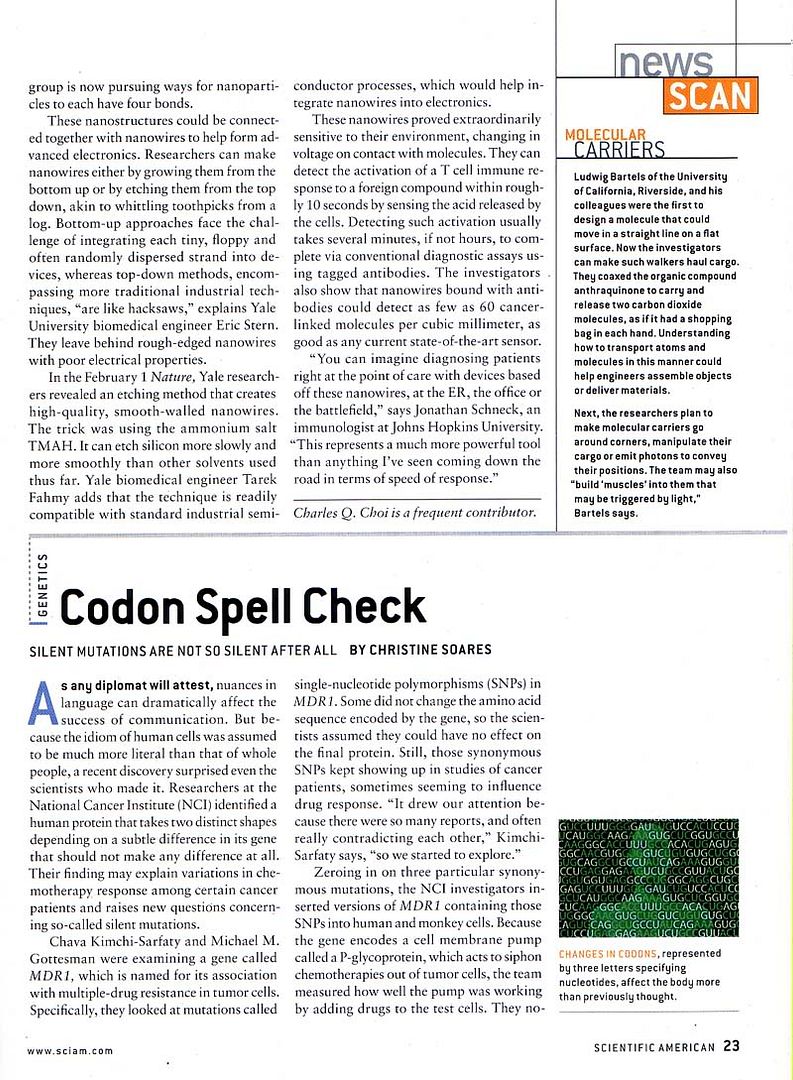
Single-nucleotide polymorphisms (SNPs) are a kind of mutation where a single base bair has been mutated. These mutations can sometimes be classified as silent mutations because even if one base pair is altered, it might still specify the correct animo acid and the protein final product might be still expressed in an exact manner by its corresponding codon sequences.
Codons are three-nucleotide sequences within genes that specify amino acids. With 64 possible triplet combinations when the four DNA bases (A,T,C&G) are rearrange to encode 20 amino acids, multiple codons can share the same amino acid meaning.
However, recent discovery shows that silent mutations are not so silent after all. What reseachers have found out is that codon bias may play a part as to why even the amino acids are strung perfectly to form a protein, it may still be deformed and classified as a mutation.
Researchers at NCS investigated this phenomena in P-glycoprotein, which acts to siphon chemotherapies out of tumour cells. They inserted versions of MDR1 containing SNPs found in humans that have known to cause a defect in the production of P-glycoprotein. They noted how well the pump was working by adding drugs to the test cells. What they noted was a difference in performance between the normal P-glycoprotein and P-glycoprotein with SNPs containing silent mutations.
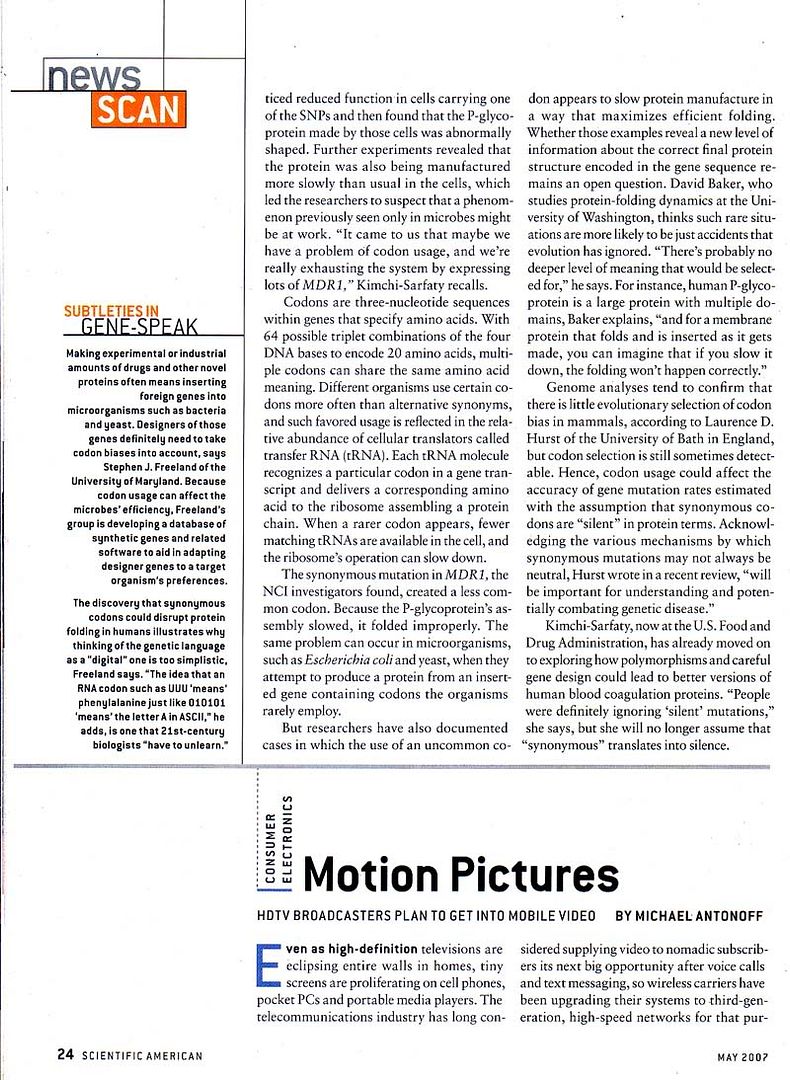
The reason for this is the result of codon bia. Different organisms use certain codons more often than alternative synonyms and such favoured usage is often reflected in the relative abundance of transfer RNAs. tRNA molecules recognizes a particular codon in a gene transcript and delivers the corresponding amino acid to the ribosome assembling a protein chain.
When a rarer codon appears, fewer matching tRNAs are available in the cell, thus production of the protein can slow down. This slowing effect can affect the overall folding of the protein, thus noticing abnormal protein shapes which looked like a mutation, even through the amino acid sequence of the protein is the same when compared against a normal version of the gene.
What is interesting to note is that I was taught about silent mutations, but have never considered that silent mutations can be evident when codon bias in an organism plays a role. The results might have implications in the way proteins are produced.
You can read the rest of the article by clicking on the images.

 thecosmopolitanwanderer.blog
Leave a comment